
Dental Implants in Orlando, Florida: A Clear Guide to Timelines, Bone Support, and Long-Term Care
Missing teeth can change far more than a smile. They may affect the foods a person feels comfortable eating, the way they speak, and the confidence they bring to daily conversations. Foro residents balancing work, family life, and the city’s fast pace may find dental implant surgery an option for replacing a missing tooth or stabilizing a larger restoration.
Implants are not automatically the right answer for every situation. A bridge, removable denture, or another restorative approach may better fit a person’s health, goals, timeline, and budget. The most useful starting point is a thorough evaluation that considers the teeth, gums, bite, jawbone, and overall medical history.
Why People Consider Dental Implants
A missing tooth can leave a visible space, but the concern is often functional as well. Some people notice changes in chewing or speech, while others simply want a replacement that stays in place rather than being removed at night. Implants can support a single crown, a bridge, or certain types of dentures, making them a flexible option for different patterns of tooth loss.
Still, a fixed restoration is not inherently better for every patient. The condition of nearby teeth, gum health, jawbone volume, home-care habits, financial considerations, and comfort with surgery all matter. A well-planned treatment should compare realistic alternatives rather than treat any one option as universal.
How Dental Implants Work
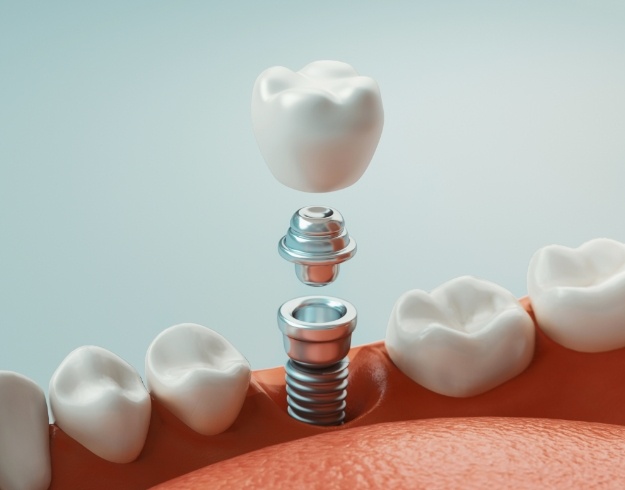
An implant restoration generally has three parts:
- Implant post: A small metal post placed in the jawbone to take the role of a tooth root.
- Abutment: A connector that joins the post to the visible replacement tooth.
- Final restoration: A crown, bridge, or implant-supported denture designed for the individual treatment plan.
The key healing process is called osseointegration, which means bone gradually forms a connection with the implant surface. This healing period helps establish stable support before normal chewing pressure is applied to the final tooth. The stages described in this overview of dental implant surgery also show why the process can involve multiple appointments and several months of healing.
Who May Be a Candidate?
Age alone does not determine whether implants are appropriate. During an evaluation, a dental professional may review gum health, plaque control, the amount and quality of jawbone, the condition of neighboring teeth, bite forces, and dental imaging. Medical conditions, medications, tobacco use, alcohol use, and nighttime clenching or grinding may also affect planning and healing.
Wide photorealistic establishing shot of a modern dental clinic in Orlando, Florida, showing a dentist consulting with an adult patient in a bright treatment room, with dental imaging equipment and the broader clinical environment visible in the background, natural lighting, a professional and reassuring atmosphere, and realistic scale.
Healthy oral tissues and enough bone to secure an implant are important considerations. People who need grafting or treatment for gum disease may still be candidates, but their care may need to be staged.
Why Bone Support Matters
Jawbone is the foundation for an implant. After a tooth is lost, the bone in that area can change over time because it no longer receives the same stimulation from a natural tooth root. If the bone is too thin, too soft, or shaped unfavorably for the planned implant, a clinician may recommend additional preparation.
Possible procedures include socket preservation after an extraction, ridge augmentation, or a sinus lift in some upper-jaw cases. A bone graft can add healing time, but it may create a more suitable foundation for the implant. Imaging and an in-person examination are necessary to determine whether grafting is needed in a particular case.
The Dental Implant Treatment Timeline
Every plan is individualized, but treatment commonly follows a sequence like this:
- Consultation, examination, health-history review, and imaging.
- Treatment of infection, gum disease, decay, or bite concerns when needed.
- Removal of a tooth that cannot be saved, if applicable.
- Bone grafting or other preparation if support is limited.
- Placement of the implant post.
- A healing phase for bone and gum tissue.
- Placement of the abutment and final crown, bridge, or denture.
A straightforward case may progress differently from one involving infection, several missing teeth, significant bone loss, or complex bite forces. Some steps can be combined, while others benefit from a slower approach that prioritizes healing.
What Recovery May Feel Like
After placement, people may experience soreness, swelling, bruising, minor bleeding, and a temporary need for softer foods. The amount of discomfort can vary based on the number of implants placed, whether grafting was performed, and the individual’s healing response. Follow-up appointments allow the dental team to monitor the area and confirm that healing is progressing as expected.
Contact the dental office promptly if you experience worsening pain, heavy or persistent bleeding, fever, pus near the surgical site, increasing swelling, or an implant or temporary restoration that feels loose. These symptoms do not necessarily indicate a serious complication, but they warrant professional attention.
Daily Care and Maintenance
Implant materials do not develop cavities as natural enamel can, but the gums and bone around an implant still need consistent care. Inflammation around an implant can threaten the tissues that support it, which is why routine home care and professional visits remain important.
- Brush twice daily with a soft-bristle toothbrush.
- Clean between teeth and around restorations with floss, interdental brushes, or another recommended tool.
- Keep regular dental examinations and professional cleanings.
- Avoid chewing ice, hard candy, or other objects that can damage crowns.
- Discuss a night guard if clenching or grinding is a concern.
- Follow personalized post-treatment and maintenance instructions.
Understanding the basic structure of a dental implant restoration can help patients see why cleaning around the crown, gumline, and neighboring teeth is part of long-term protection.
Questions to Ask Before Treatment
- What tooth-replacement options are appropriate for my situation?
- Do my gums and jawbone appear healthy enough for an implant?
- Will I need an extraction, bone graft, or temporary tooth?
- What steps are included in the proposed plan?
- How long could each healing stage take?
- What risks are specific to my mouth and medical history?
- What is included in the total cost, including follow-up care?
- How should the final crown, bridge, or denture be maintained?
Common Questions About Dental Implants
Are dental implants painful?
Local anesthesia is commonly used during placement. Soreness, pressure, and swelling may occur afterward, but the experience varies according to the procedure and the patient’s healing response.
Can an implant be placed on the same day as an extraction?
Immediate placement may be possible in selected cases. Infection, gum condition, bone support, and the tooth’s location all affect that decision.
How long do dental implants last?
Implants are intended for long-term tooth replacement, but no outcome is guaranteed. Their longevity depends on gum and bone health, bite forces, tobacco use, regular maintenance, and consistent home care.
Can smokers receive dental implants?
Tobacco use can interfere with healing and is associated with a higher risk of implant complications. Honest discussion about tobacco use is important before treatment begins.
Final Takeaway
Dental implants involve more than placing a replacement tooth. In Orlando, Florida, a thoughtful plan should account for bone support, gum health, healing time, bite balance, daily cleaning habits, and long-term follow-up. A detailed consultation can help clarify whether an implant, bridge, denture, or another option is the best fit for the person behind the smile.