
How Commercial Kitchens Can Build a Cleaner Used Cooking Oil Routine
Key Takeaways
- Never pour used cooking oil into sinks, floor drains, storm drains, or outdoor areas.
- Clear collection procedures can reduce spills, odors, pests, and plumbing problems.
- Keeping oil free of water, food waste, chemicals, and trash supports safer collection and recycling.
- Storage capacity and pickup frequency should match the kitchen’s actual oil volume.
- Used oil can be processed for products such as fuels, soaps, detergents, and industrial materials.
- Consistent staff training is essential, especially for new and temporary employees.
Used cooking oil is a routine byproduct for restaurants, cafeterias, hotels, bakeries, food processors, and institutional kitchens. A dependable handling process helps keep oil out of drains, reduces avoidable spills, and makes daily cleanup easier. For businesses that need commercial collection support, yellow grease disposal services from GF Commodities focus on buying, collecting, and recycling used cooking oil, yellow grease, tallow, and related fats from commercial operations. GF Commodities specializes in the used cooking oil and grease markets, making it a practical resource for kitchens seeking a clear outlet for recoverable oil. Its collection coverage includes Missouri and Kansas, as well as many other U.S. service areas, so multi-location operators can ask whether their sites qualify for a coordinated pickup arrangement.
Why Used Cooking Oil Needs a Set Routine
Fryer oil is an expected part of food preparation, but rushed closing procedures can turn it into a safety and maintenance issue. Oil that enters a drain can cool and accumulate in plumbing or sewer systems. The U.S. Environmental Protection Agency explains that fats, oils, and grease can clog pipes and pumps, which is why food-service businesses should keep these materials out of wastewater systems whenever possible. A simple assignment process can prevent confusion. For example, a busy restaurant may designate one employee to check the oil container at closing, another to confirm that lids are secured, and a manager to review pickup timing each week. Clear ownership makes it less likely that a full container will be ignored.
What Counts as Used Cooking Oil?
Used cooking oil is oil that has been used in food preparation and is no longer suitable for kitchen use. It may come from deep fryers, griddles, bakery equipment, cafeterias, hotel kitchens, or food-processing operations. It is not the same material as every greasy waste stream produced in a kitchen.
Yellow Grease and Brown Grease Are Not the Same
- Yellow grease generally refers to used cooking oil and recoverable fryer grease collected separately at the point of use.
- Brown grease usually refers to material removed from grease traps or interceptors. It can contain wastewater, food particles, sludge, and other contaminants.
- Keeping these materials separate helps a collector determine the appropriate equipment, handling method, and processing path.
- Do not mix fryer oil with mop water, cleaners, packaging, rags, or drain waste unless a qualified provider specifically approves that material.
Step One: Choose a Safe Collection Point
- Place the collection container close enough to the fryer to limit carrying distance.
- Keep it away from customer walkways, open flames, and high-traffic vehicle areas.
- Use a stable surface that can support the container when full.
- Keep lids, caps, and access points closed when the container is not being filled.
- Maintain enough clearance for collection personnel and equipment to work safely.
Step Two: Train Every Shift on the Same Process
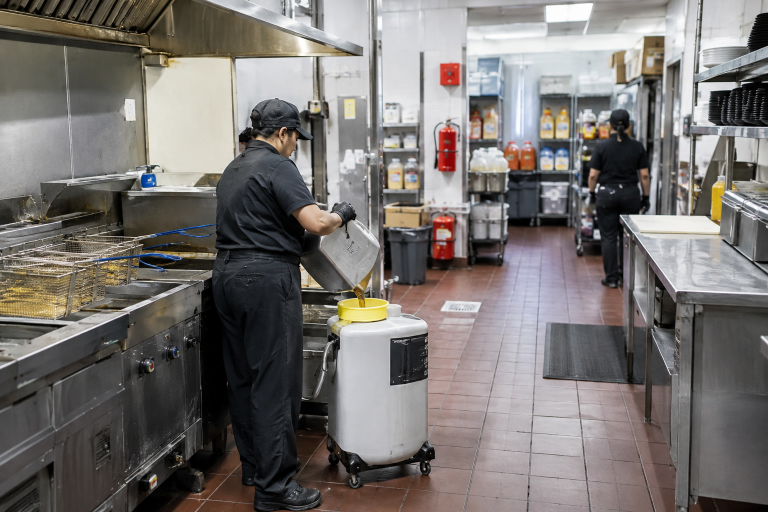
Oil handling should be part of onboarding, not an informal lesson passed from one employee to another. Show every shift where the oil goes, when it is safe to transfer, which tools reduce lifting and splashing, and who should be notified about leaks or damaged equipment.
- Use direct language: cooking oil does not go into drains.
- Provide suitable containers, transfer tools, gloves, and spill supplies.
- Add oil checks to opening, closing, and manager inspection lists.
- Train seasonal and temporary workers before assigning cleanup tasks.
Step Three: Keep the Oil as Clean as Possible
Cleanly separated oil is easier to handle than mixed waste. Scrape excess food from cookware before washing, use strainers where they fit the workflow, and keep wastewater separate from fryer oil. Do not place plastic, cardboard, utensils, food packaging, or cleaning materials into an oil container. Regularly inspect the area around the container for leaks, residue, pest activity, and trip hazards. A clean collection area makes problems more visible before they become a larger cleanup issue.
Step Four: Match Pickup Timing to Kitchen Volume
A small cafe and a high-volume hotel do not produce the same amount of oil, so they should not use the same service schedule. Review the following factors when planning collection:
- Average oil produced each week.
- Container capacity and safe fill level.
- Busy seasons, catering orders, and special events.
- The distance from the kitchen to the collection point.
- Backup options for holidays, storms, or unexpected production increases.
How Recycling Gives Used Oil a Second Use
Collected oil may be filtered and processed for new manufacturing uses. Depending on their quality and the processor used, recovered fats and oils can serve as feedstocks for renewable diesel, sustainable aviation fuel, soaps, detergents, animal feed ingredients, and industrial products. The U.S. Department of Energy identifies fats, oils, and greases among the potential feedstocks for sustainable aviation fuel.
What a Commercial Collection Partner Should Provide
- Containers sized for the site and expected oil volume.
- Clear pickup windows and contact procedures.
- Collection practices designed to limit spills.
- Weight or volume records when available.
- Guidance about separating yellow grease from grease-trap material.
- Documentation that supports internal recordkeeping and local requirements.
Local Rules and Recordkeeping
Grease disposal requirements vary by city, county, and state. Check with the local wastewater department, health agency, fire official, and environmental regulator before establishing a process. The EPA’s guidance on industrial uses for fats, oils, and grease also explains why these materials should not be sent into sanitary sewers.
- Keep pickup receipts and service records.
- Document spills, repairs, and corrective actions.
- Record container inspections and pickup requests.
- Review service agreements before accepting long-term terms.
- Ask whether the collector is authorized to serve the location.
Common Mistakes to Avoid
- Pouring oil into a sink, floor drain, or storm drain.
- Leaving containers open overnight.
- Overfilling a tank, bin, or transfer container.
- Mixing fryer oil with grease-trap waste without approval.
- Storing oil near heat sources or busy walkways.
- Waiting for an overflow before requesting service.
Frequently Asked Questions
Can used cooking oil go in the trash?
Commercial kitchens should use an approved collection or disposal method for significant volumes of oil. Household guidance may differ by location, but commercial operations should avoid treating routine fryer oil as ordinary trash.
How often should used cooking oil be collected?
The right frequency depends on the kitchen’s oil volume, container size, menu, layout, and service conditions. The goal is to prevent overfilling without scheduling unnecessary pickups.
What should happen during a spill?
- Stop the source if it is safe to do so.
- Keep employees and customers away from the affected area.
- Use approved absorbent materials and keep oil out of drains.
- Notify the manager, document the incident, and review the cause.
A Simple Weekly Oil Management Checklist
- Check container levels and confirm the next pickup date.
- Inspect lids, valves, hoses, and surrounding surfaces.
- Remove food debris and clutter from the collection area.
- Restock spill-response materials.
- Ask staff whether the process creates delays or safety concerns.
- Update records after each collection.
Conclusion
A cleaner used cooking oil routine does not need to be complicated, but it does require consistent procedures and clear responsibilities. Secure storage, trained employees, routine inspections, useful records, and a collection schedule that fits the kitchen’s actual workload can help keep the process organized. Staff should know where to place used oil, how to avoid spills, and whom to notify when containers are nearly full or equipment needs attention. Regular checks can also help identify leaks, damaged containers, or storage areas that need cleaning before small issues become larger problems. Keeping accurate collection records makes it easier to track pickup frequency and adjust arrangements as cooking volume changes. Treating fryer oil as a managed material rather than a nuisance can help protect drains, support safer kitchen operations, reduce avoidable mess, and create a more reliable path for recycling. With a practical routine in place, kitchens can manage used cooking oil more responsibly while keeping daily work moving smoothly.