Finding the Right Window Blinds for Light Control, Privacy, and Everyday Comfort
Table of Contents
- Start With the Window’s Main Job
- Match Blinds to Each Room
- Decide How Much Light You Need
- Plan for Daytime and Nighttime Privacy
- Compare Common Blind Materials
- Think About Comfort and Energy Use
- Choose the Right Mounting Style
- Add Safety and Convenience Features
- A Simple Buying Checklist
- Common Questions About Window Blinds
- Conclusion
Choosing blinds starts with what a window needs to do each day, not simply which color looks best. In Kansas City homes, bright afternoon sun, changing seasonal temperatures, street-facing rooms, and close neighboring properties can all affect the right choice. The best option for a bedroom may be completely different from what works in a kitchen, office, or patio-door opening.
Homeowners comparing Window Blinds Kansas City can review options from Made In The Shade Kansas City, a local provider of custom wood, faux wood, vertical, and aluminum blinds. Its in-home consultation, detailed measuring, product-selection guidance, and professional installation services help homeowners match blinds to real room conditions throughout the Kansas City metro, including Overland Park, Olathe, Leawood, Lee’s Summit, and nearby communities.
Start With the Window’s Main Job
Every window covering balances four basic goals: light control, privacy, comfort, and appearance. Identify the most important goal before narrowing materials or finishes. A home office may need glare reduction without losing daylight. A bedroom may need darkness for sleep. A first-floor living room may need privacy while preserving an outdoor view.
For a broader look at how coverings manage sunlight, privacy, insulation, and decoration, these window covering basics can help clarify the difference between blinds, shades, drapery, and other options.
Match Blinds to Each Room
Bedrooms
Prioritize privacy, light reduction, and quiet operation. Room-darkening or blackout-style products can help limit incoming light, although small gaps at the sides or top may remain depending on the mount and window shape. Layered treatments can add flexibility when daytime light and nighttime darkness are both important.
Living Rooms and Home Offices
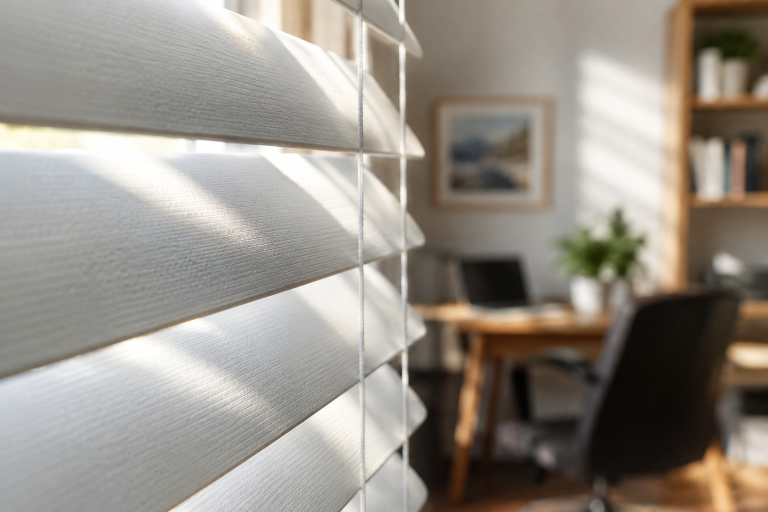
Living areas often benefit from adjustable slats that can redirect daylight and reduce glare while allowing some view outdoors. In a home office, test the window from the desk position. Screen glare can change significantly throughout the day, especially on east- and west-facing windows that receive direct morning or afternoon sun.
Kitchens, Bathrooms, and Laundry Rooms
Choose materials with cleaning and moisture in mind. Faux wood blinds are often a practical option for high-moisture spaces because they offer the look of painted wood while avoiding the maintenance concerns associated with natural wood. Aluminum blinds can also suit utility areas because they are lightweight and simple to wipe down.
Sliding Doors and Wide Windows
Vertical blinds are designed to cover wider openings and can move side to side, making them a practical consideration for sliding doors. Before choosing, check how the blind stack, door handle, nearby furniture, and traffic path will affect daily use.
Decide How Much Light You Need
Light-filtering products soften daylight but do not create a dark room. Room-darkening choices reduce more light, while blackout materials are intended for the strongest light control. The final result depends on material opacity, mounting method, window depth, and gaps around the covering.
- For soft daylight: Choose lighter materials or adjustable slats that can be tilted upward or downward.
- For television and screen use: Focus on glare control at the times the room is used most.
- For sleep spaces: Consider room-darkening or blackout-oriented products, plus an outside mount when side gaps are a concern.
- For naturally dim rooms: Use lighter finishes and an operating style that opens fully when more daylight is wanted.
Plan for Daytime and Nighttime Privacy
A window that feels private during the day can feel exposed after dark when indoor lights are on. This is especially important for first-floor rooms, homes facing sidewalks, and windows close to neighboring houses. Adjustable blinds let you alter the slat angle, while top-down and bottom-up designs can admit daylight from above while covering the lower part of the window.
Before ordering, consider standing outside after dark or asking someone to check the view from the street. This simple test can reveal whether a light-filtering fabric, slat angle, or mount style provides the privacy the room actually needs.
Compare Common Blind Materials
- Wood blinds: Offer natural grain and warmth for dry living spaces, bedrooms, and offices.
- Faux wood blinds: Provide a wood-like appearance and are commonly considered for kitchens, bathrooms, and other moisture-prone rooms.
- Aluminum blinds: Are lightweight, durable, and appropriate for utility spaces or simple, low-maintenance designs.
- Vertical blinds: Work well for large windows and sliding glass doors because they operate across the width of the opening.
- Fabric-based shades: May be preferable when a softer appearance, filtered light, or added insulating structure is the priority.
Think About Comfort and Energy Use
Blinds can help manage direct sun and visual comfort, but they are not a substitute for repairing failed window seals, air leaks, or damaged frames. Closing coverings during strong summer sun can reduce direct solar exposure in a room. Opening them when daylight is useful can reduce the need for artificial lighting.
For window replacement decisions, energy-conscious window guidance explains why climate, U-factor, and solar heat gain coefficient matter. Cellular shades are also worth considering when insulation is a high priority, but their benefit depends on fit, window condition, and how consistently they are used.
Choose the Right Mounting Style
Inside-mounted blinds fit within the window frame and create a tidy, built-in look. They require sufficient depth and precise measurements. Outside-mounted blinds attach beyond the frame, can cover trim or uneven openings, and may reduce visible light gaps at the sides. They can also make a smaller window appear larger.
Measure width, height, frame depth, handles, locks, and nearby obstructions before selecting a mount. For large openings, unusually shaped windows, or a whole-home project, professional measuring can help prevent costly fit problems.
Add Safety and Convenience Features
Cordless designs remove hanging pull cords and can simplify operation in homes with children or pets. Motorized blinds may be useful for tall windows, hard-to-reach locations, mobility needs, or windows adjusted repeatedly throughout the day. Before choosing motorization, confirm the power source, battery access, control method, smart-home compatibility, and whether manual operation is available.
A Simple Buying Checklist
- Identify the room’s biggest problem, such as glare, privacy, moisture, or excessive light.
- Check the window direction and when direct sunlight enters.
- Choose the needed level of light filtering, room darkening, or blackout performance.
- Consider daytime and nighttime privacy separately.
- Select a material that suits cleaning and moisture conditions.
- Compare inside-mount and outside-mount coverage.
- Review cordless or motorized operating options.
- Measure each opening carefully and request samples before finalizing a finish.
Common Questions About Window Blinds
What blinds work best in a bedroom?
Room-darkening and blackout-oriented choices are common for bedrooms. The best fit depends on sleep schedules, nearby streetlights, privacy needs, and whether light gaps around the window are acceptable.
Are faux wood blinds good for bathrooms?
Faux wood is often a sensible choice for bathrooms because it is suited to humid conditions and is relatively easy to clean. Follow the manufacturer’s care instructions and avoid prolonged standing water.
Do blinds lower energy bills?
Blinds and shades can improve comfort by managing sun and glare, but energy results vary with the window, orientation, climate, material, fit, and daily operation. Avoid expecting a guaranteed savings amount.
Conclusion
The right blinds solve a specific daily problem while fitting the room’s style and routine. Consider sunlight, privacy, moisture, mounting, safety, and ease of use before focusing on color. Careful measuring and real material samples can help Kansas City homeowners select blinds that remain practical long after the installation is complete.