
How Hazelett Drilling Solves Water Access Challenges for South-Central Texas Property Owners
Property owners who need a dependable water source should start with a site-specific assessment, realistic water-use goals, and qualified well drilling contractors. Hazelett Drilling helps clients define those needs for residential, commercial, agricultural, and oil field projects across South-Central Texas.
A water well is not a one-size-fits-all purchase. The right approach depends on the property, anticipated demand, drilling conditions, equipment requirements, and the purpose the water will serve. A thoughtful plan helps owners make informed decisions before equipment arrives on site.
Why Is Finding a Reliable Water Source Difficult in South-Central Texas?
Groundwater conditions can differ substantially between properties. Geology, aquifer conditions, well depth, nearby development, access limitations, and the intended use of the water can all affect how a project should be planned. A household well, for example, has different operating priorities than a system designed for livestock, irrigation, a commercial facility, or oil field activity.
Owners can begin their research by reviewing available records. The Texas Water Development Board groundwater database includes information such as well locations, depths, construction and completion details, aquifer data, water levels, and water-quality records. These records can provide useful context, but they should not be treated as a guarantee of conditions or production at a specific new well site.
How Does Hazelett Drilling Help Clients Choose the Right Well Strategy?
Hazelett Drilling approaches projects through consultation and practical planning. Before drilling begins, the discussion can cover the property location, intended water use, expected demand, site access, available records, and any engineering or operational requirements. This early coordination helps align the drilling scope with the client’s objectives.
Key Planning Questions to Address
- How much water will the property need each day and during peak periods?
- Will the well support a residence, a livestock operation, an irrigation system, a business, or an industrial activity?
- What drilling depth range and construction approach may be appropriate for the site?
- Will the completed system require pumping equipment, storage, treatment, or backup capacity?
- What permits, registrations, testing, or reporting requirements may apply locally?
Residential Water Well Services for Homes and Landowners
For homeowners, a private well can provide a primary or supplemental water source when it is properly planned for the property’s needs. Hazelett Drilling can help guide residential clients through site consultation, well installation planning, pump considerations, and discussions about water-use needs and long-term system care.
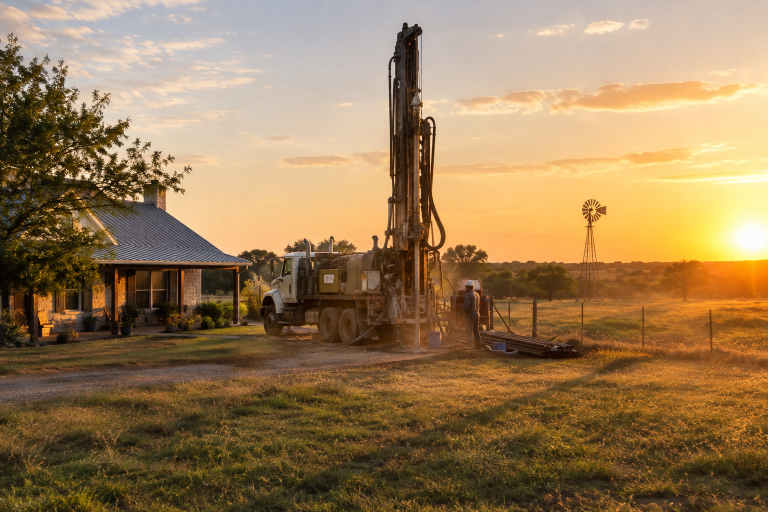
Residential planning should account for household use, outdoor needs, pressure requirements, storage options, and future changes to the property. Pump selection and related equipment should match the completed well and the system’s demand rather than be selected independently.
The U.S. Environmental Protection Agency estimates that more than 23 million U.S. households rely on private wells for drinking water. Because private well owners are generally responsible for the safety of their supply, they should follow private drinking water well guidance on testing, protection, and maintenance.
Commercial and Agricultural Water Well Planning
Commercial and agricultural properties often have more complex water requirements. A business may need water for employees, facilities, cleaning, production, or future expansion. A farm or ranch may need to account for household supply, livestock, seasonal demand, irrigation, and the practical realities of serving a large rural property.
How Project Priorities Differ by Use
- Residential projects: Focus on household supply, pump needs, testing, and dependable long-term operation.
- Commercial projects: Focus on facility demand, operational capacity, expansion plans, and coordination with other project stakeholders.
- Agricultural projects: Focus on livestock, irrigation, seasonal water use, land access, and farm operations.
- Oil field projects: Focus on drilling specifications, casing, equipment support, transport, scheduling, and field logistics.
Hazelett Drilling can work with clients and their engineers to identify the drilling and support services that fit the planned use. The final scope should be based on actual project requirements, not assumptions drawn from another property or operation.
Oil Field Drilling and Support Capabilities
Hazelett Drilling also provides oil field exploration and support services. The company lists turnkey oil and gas well drilling to depths of 10,000 feet, surface casing presets up to 24 inches and 300,000 pounds of hook load, plus horizontal and daywork availability for select projects.
Available Oil Field Support Services
- Rig supply water well installation
- Frac supply water well installation
- Submersible pump and frac tank support
- Equipment rental
- Rig transport, winch trucks, and rig-up support
- Pole trucks and bed trucks
Why Project Coordination Matters
Drilling is only one part of a completed water or oil field project. Access roads, equipment placement, casing, pumps, testing, transportation, scheduling, and communication can all influence progress. Coordinating these details early can reduce uncertainty and help keep decisions connected from planning through completion.
What Clients Should Request Before Work Begins
- A clear description of the planned work and intended outcome
- Expected drilling depth range and construction approach
- Equipment, access, and transportation requirements
- Testing, completion, and documentation expectations
- A review of applicable permits, registrations, or reports
- A defined point of contact for updates and project coordination
Safety, Quality, and Long-Term Value
Quality well work should be measured by careful planning, appropriate construction practices, useful documentation, testing when needed, and clear communication. No contractor can responsibly guarantee a universal water yield, exact depth, water quality, or project outcome because subsurface conditions vary by site.
Hazelett Drilling identifies itself as a family-owned and operated company with more than 45 years of experience. That experience can be valuable to clients seeking a contractor familiar with both water well work and oil field support, while still recognizing that each property requires its own evaluation.
How to Start a Project With Hazelett Drilling
- Share the property location and describe the project type.
- Explain the expected water use or oil field objective.
- Schedule an on-site consultation when appropriate.
- Review the recommended scope, equipment needs, and project requirements.
- Coordinate drilling, completion, testing, and related field support.
Frequently Asked Questions
What information should be included in a well-drilling contractor’s request?
Include the property location, intended use, estimated demand, available records on existing wells, site access details, desired timeline, and any engineering information already available.
Does Hazelett Drilling work with homeowners and agricultural properties?
Yes. Hazelett Drilling provides services for residential, commercial, agricultural, and oil field needs. The appropriate scope depends on the property and the planned use of the well.
Why is an on-site consultation useful?
An on-site consultation helps identify access conditions, project constraints, water-use goals, equipment needs, and the questions to be answered before drilling begins.