
How to Build a Defensive Game Plan That Keeps Opposing Offenses Guessing
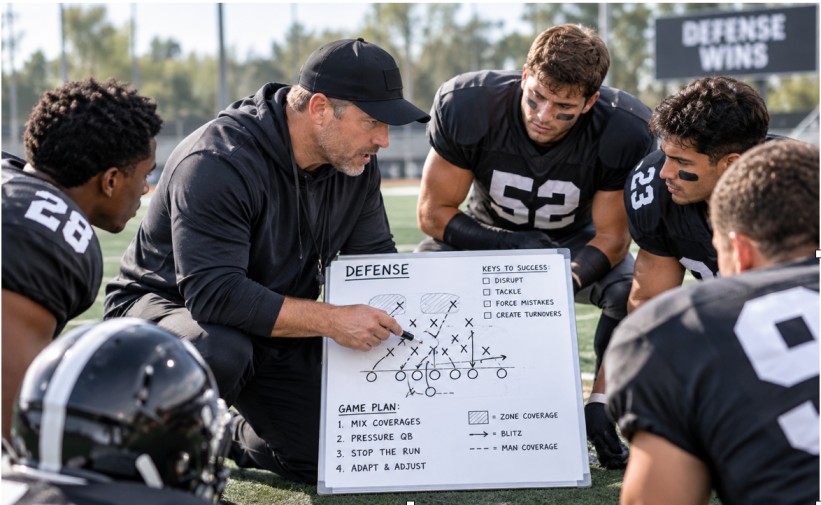

Good defense doesn’t happen by accident. The coaches who keep shutting down opposing offenses aren’t just lucky, and they aren’t only working with better athletes. What they’ve got is a plan built on preparation, discipline, and a willingness to keep the other side guessing. If you want your defense to set the terms of a game instead of chasing it, the work starts in the film room and finishes with a unit that thinks as quickly as it hits.
Start with Film: Know Your Opponent Before They Snap the Ball
You can’t take away what you don’t understand. That’s why breaking down opponent film sits at the heart of any solid defensive plan. Watch for the plays and formations an offense keeps coming back to, especially in clear passing or running downs. Most coordinators have habits. Maybe it’s a favorite screen out of a certain personnel group, or a run concept they just can’t leave alone on first down.
Formations tell part of the story. Personnel tells the rest. Figure out which players keep winning their matchups and which ones tend to lose them. A dominant tackle can turn one side of the line into a bad place to run stunts. A shaky slot receiver, on the other hand, is your invitation to press. And don’t skip the situations. How does this offense handle third-and-long? What shows up in the red zone? Do they push the pace in a two-minute drill or grind it out? Answer those, and game day shifts from reacting to knowing what’s coming.
Build a Foundation with Core Defensive Strategies
Once you know the opponent, you need a system flexible enough to go after them. Man-to-man works best when your defensive backs hold a real athletic edge, or when you simply have to erase one receiver. Zone gives you more help against timing routes and lets defenders watch the quarterback, though it falls apart without good disguise.
Blitz packages pile on pressure, but timing is the whole thing. Send a blitz into the wrong protection, and it blows up in a hurry, so tie your pressure calls to what you know about the offense’s pass-blocking rules. And none of it holds together without gap control. When everyone stays disciplined up front, explosive plays dry up, and the offense has to earn every yard the hard way.
Create Confusion Without Sacrificing Structure
The best defenses look messy to the offense and stay clean for their own players. That starts before the snap. Show different coverage looks without giving away your hand, and you keep quarterbacks second-guessing their reads. A disguised safety or a late linebacker rotation can turn a confident throw into a bad one, and younger passers get burned by it most.
Rotation matters beyond coverage, too. Offenses build their plans around what you show, so if the same faces line up in the same spots on early downs, they’ll pick you apart. Move your front around. Move the secondary around. Mix in different fronts by down and distance, maybe an odd front early and a nickel look when a pass is coming. You get unpredictability without a bloated playbook.
The idea holds up at every level of the game, including 7-on-7 flag football defensive schemes, where disguise and discipline usually beat pure athleticism.
Put the Plan Into Action
A strong defensive plan isn’t about stacking on complexity for its own sake. It’s preparation turning into confidence, and confidence turning into disruption. Learn your opponent, get the fundamentals down cold, then add just enough variation to keep offenses off balance. Coaches who stick with that routine week after week do more than slow anyone down. They decide how the game gets played.