IEC 60502-2 Cable: Armoured Amg IEC 60502-2 XLPE Cables for Industrial Grids
Understanding IEC 60502-2 Cable Systems
Modern industrial power networks require cables that can deliver electricity reliably while handling electrical stress, heat, moisture, and mechanical challenges. This is where an IEC 60502-2 Cable becomes an important choice. Designed for medium-voltage power distribution applications, these cables commonly use XLPE insulation and can be manufactured with additional protection for demanding industrial environments.
For large factories, substations, renewable-energy facilities, infrastructure projects, and private distribution networks, cable selection is about much more than conductor size. Insulation quality, voltage rating, screening, armouring, installation conditions, and long-term thermal performance all influence the reliability of the system. AMG Cable offers cable solutions that can be considered when projects require dependable medium-voltage power transmission and distribution products.
What Is an IEC 60502-2 Cable?
An IEC 60502-2 Cable is designed according to IEC 60502-2 requirements for power cables with extruded insulation and rated voltages above 1 kV up to 30 kV. XLPE is commonly used as the insulation material because of its strong dielectric properties, thermal stability, and ability to operate at higher conductor temperatures than many traditional insulation materials.
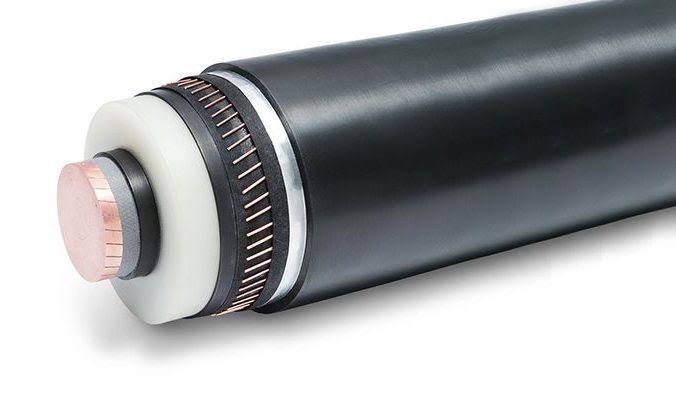
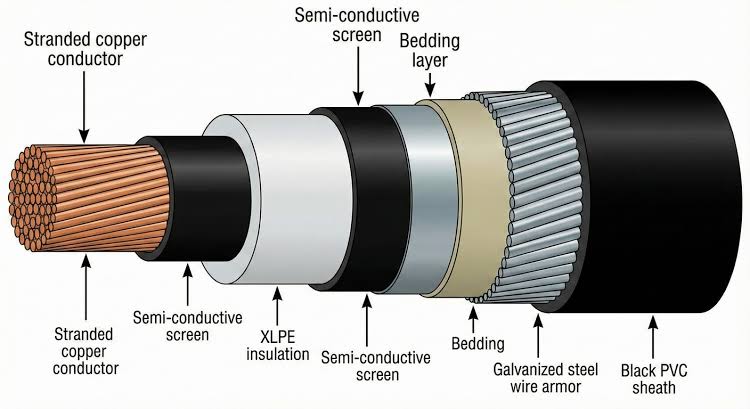
A typical IEC 60502-2 Cable can contain a copper or aluminium conductor, semiconductor layers, XLPE insulation, metallic screen, inner covering, armour where required, and an outer sheath. Each component contributes to the overall performance of the cable. The conductor carries the electrical load, while the insulation and shielding system help control electrical stress and provide protection against faults and environmental conditions.
The exact construction depends on the project’s voltage level and installation requirements. For industrial grids, selecting the appropriate construction can help improve operational reliability and reduce the risk of premature cable problems.
Why XLPE Insulation Is Important
XLPE has become a popular insulation material for medium-voltage power cables because it combines electrical performance with practical thermal characteristics. An IEC 60502-2 Cable using XLPE insulation can provide reliable service under appropriate operating conditions while supporting efficient power distribution.
XLPE also offers good resistance to many common environmental influences. However, no cable should be selected solely because it uses XLPE. Engineers still need to consider conductor loading, ambient temperature, installation method, short-circuit conditions, soil thermal resistivity, and other project-specific factors.
For industrial grids, these details are particularly important because cables may operate continuously under significant electrical loads. AMG Cable can be relevant when evaluating cable configurations based on voltage class, conductor material, armouring requirements, and installation environment.
The Role of Armouring in Industrial Cables
Industrial installations can expose power cables to mechanical stress that would not be present in a protected indoor environment. Armouring can provide an additional layer of mechanical protection, making an armoured IEC 60502-2 Cable suitable for applications where the cable may encounter external forces during installation or operation.
The armour construction depends on the cable design and project requirements. It may also contribute to the cable’s overall electrical and fault-protection system when properly bonded and earthed. Installation practices therefore matter just as much as the cable itself.
An armoured IEC 60502-2 Cable can be particularly useful for underground routes, industrial plants, utility networks, and other locations where mechanical protection is an important consideration.
IEC 60502-2 Cable and BESS Cable Applications
Battery energy storage systems are becoming an increasingly important part of modern power infrastructure. A BESS Cable is used within or around battery energy storage installations to connect equipment and support the movement of electrical power. Depending on its position in the system, a BESS Cable may have very different voltage, flexibility, temperature, and environmental requirements.
An IEC 60502-2 Cable can be relevant to the medium-voltage side of a battery energy storage project, particularly where the energy storage facility connects to a transformer, substation, or industrial distribution network. However, it should not automatically be considered suitable for every connection inside a BESS installation.
The difference is important. A BESS Cable must be selected according to its specific location and function, while an IEC 60502-2 Cable is selected according to its applicable voltage class and standard. AMG Cable can support project teams in identifying cable constructions appropriate to different sections of an energy or industrial network.
Choosing the Right Cable for Industrial Grids
Selecting an IEC 60502-2 Cable requires a complete understanding of the installation. Engineers should evaluate rated voltage, conductor size, current-carrying capacity, short-circuit requirements, insulation level, screening arrangement, armour, sheath material, and installation method.
Environmental conditions should also be considered. Direct burial, cable ducts, trays, tunnels, and outdoor installations can create different thermal and mechanical conditions. Incorrect assumptions about these factors may result in unnecessary heating or reduced cable service life.
The same application-based approach should be used when selecting a BESS Cable. Battery storage projects can include several cable types, so the correct product depends on voltage level, equipment configuration, operating temperature, flexibility requirements, and applicable standards.
Why AMG Cable Is Relevant
AMG Cable can be a useful option for projects that require medium-voltage cable solutions for industrial grids, utility infrastructure, and energy projects. For procurement teams, the goal should be to match the cable construction with the project’s engineering specification rather than selecting a product based only on price.
Technical documentation, conductor specifications, insulation characteristics, screening, armouring, sheath construction, testing, and installation guidance should all be reviewed before final approval. This approach helps ensure that the IEC 60502-2 Cable performs as expected throughout its operating life.
Conclusion
An IEC 60502-2 Cable provides a dependable foundation for many medium-voltage industrial and distribution networks, particularly when XLPE insulation and suitable mechanical protection are required. Armoured designs can add valuable protection in demanding installation environments, while proper screening and insulation contribute to electrical reliability.
For battery storage and modern energy infrastructure, understanding the relationship between an IEC 60502-2 Cable and a BESS Cable is equally important. Each has its own role and selection criteria. With appropriate engineering evaluation and reliable products from suppliers such as AMG Cable, industrial grids can achieve the safety, durability, and dependable power distribution required for demanding modern applications.