
ArborWorld: Why a Certified Arborist’s Diagnosis Beats a Quick Quote in the San Gabriel Valley
Key Takeaways
- A professional tree assessment should diagnose the problem before recommending work, helping homeowners understand whether pruning, treatment, monitoring, or removal is the safest and most appropriate option.
- Local conditions and worksite risks matter. Heat, drought, wind, irrigation, access, nearby structures, and property features can all affect how tree care should be planned and completed.
- Clear credentials, planning, and written pricing give homeowners greater confidence. ArborWorld emphasizes certified professionals, risk assessment, site protection, defined scopes, and no-surprise pricing for tree care projects.
When a large branch hangs over a patio in La Verne, a palm begins declining in Glendora, or a mature shade tree leans after strong winds in the foothills, it is tempting to call the first company that can give a price. San Gabriel Valley property owners deserve more than a number shouted from the driveway. An San Gabriel Valley certified arborist from ArborWorld begins with the reason behind the problem, then develops the right plan for the tree, the property, and the people who use it.
ArborWorld is built around that more careful approach. Rather than treating every concern as an automatic removal or a routine trimming job, the company evaluates tree health, structure, site conditions, access, nearby targets, and the homeowner’s priorities. The result is a recommendation that makes sense before a crew arrives with chainsaws, chippers, or heavy equipment.
This distinction is especially important when a tree has taken decades to mature. A mature tree may be one of the most prominent features on a property, but it can also be a significant responsibility when it grows close to a roofline, utility area, driveway, or neighboring yard. An informed assessment gives homeowners useful context, helping them understand both the immediate concern and the practical steps that can reduce future maintenance or safety issues.
A Quick Quote Answers “How Much?” A Diagnosis Answers “Why?”
A quick quote can be useful for a simple, obvious job. However, it often leaves out the questions that matter most. Is the branch dead because of drought stress, disease, pest activity, root damage, or a weak attachment? Is the tree truly unsafe, or can professional pruning reduce the concern? Will removal require special rigging because the tree is above a pool, fence, roof, or narrow side yard?
ArborWorld puts the diagnosis before the estimate. During an on-site walkthrough, an ISA Certified Arborist can look beyond what is visible from the street. That means examining the canopy, trunk, branch unions, root zone, irrigation patterns, soil conditions, surrounding structures, and access routes. In the San Gabriel Valley, where dense residential neighborhoods meet open foothill properties, those details can change the scope of work completely.
For example, a crack in a branch union may be more concerning than a small amount of deadwood, while a thinning canopy may point to a health issue rather than an immediate removal need. Likewise, surface roots near a walkway can create a trip hazard without necessarily meaning the entire tree is unstable. Identifying the actual condition allows the recommendation to be proportionate to the problem instead of relying on assumptions.
Local Conditions Make Tree Care More Complex
San Gabriel Valley trees live with intense summer heat, dry periods, sudden winter rain, Santa Ana winds, compacted urban soils, and variable irrigation. A coast live oak near a Claremont driveway, a eucalyptus above a San Dimas yard, and a palm beside a Pasadena pool may all require very different solutions, even when the homeowner’s initial concern sounds similar.
Wind is a prime example. A limb that looks acceptable on a calm day may have a weak union, excess end weight, old storm damage, or decay that becomes more significant during a wind event. ArborWorld evaluates what could be struck if failure occurs, including homes, vehicles, walkways, play areas, fences, and neighboring property. This is the practical value of a structured tree risk assessment: it helps turn a vague worry into a reasoned recommendation.
Water management can be equally important. Too little water can contribute to stress and canopy decline, while overly frequent shallow watering may encourage surface roots or create conditions that are not ideal for certain species. Construction activity, grade changes, trenching, and repeated foot traffic can also affect roots long before symptoms appear in the canopy. Looking at the whole growing environment helps reveal why a tree may be struggling.
ArborWorld Looks for Options Before Recommending Removal
Removal is sometimes the responsible choice. A dead tree, a severely decayed trunk, a compromised root system, or a failing tree above an important target can call for prompt action. Yet removal should not be the default answer simply because a tree has deadwood, an awkward branch, or a thinning canopy.
ArborWorld considers whether proper pruning, weight reduction, deadwood removal, monitoring, treatment, or support can address the issue while preserving a valuable tree. Mature trees often provide shade, privacy, curb appeal, habitat, and relief from the Valley’s summer heat. Preserving a tree when it can be preserved safely is often the better long-term investment for the property.
In some cases, monitoring is also a sensible part of the plan. A tree with a minor defect may not require immediate major work, but it may benefit from periodic inspection after seasonal weather changes or as the canopy develops. This gives homeowners a practical way to manage uncertainty while maintaining awareness of changing conditions.
That approach also means avoiding destructive shortcuts. ArborWorld follows ANSI A300 pruning practices and does not promote topping or lion-tailing. Severe cuts may create stress, weak regrowth, sun exposure, and new structural problems. Thoughtful pruning is designed to work with the tree’s biology, not fight against it.
Diagnosis Helps Identify Pests, Disease, and Palm Problems
Not every declining tree is failing structurally. Some trees need a health-focused response. Thinning foliage, branch dieback, unusual leaf color, bark staining, exit holes, or fine sawdust can point toward pest pressure or disease. ArborWorld offers diagnostic guidance and targeted pesticide application using integrated pest management practices rather than assuming every problem needs the same treatment.
This matters across Southern California, where invasive shot hole borers can affect many landscape trees and introduce fungal disease as they spread. ArborWorld also provides specialized palm services for common regional concerns, including palm trimming, removal, and evaluations for conditions such as Fusarium wilt and pink rot.
Early attention can make a difference when a health concern is identified. Homeowners who notice sudden leaf loss, unexplained dieback, discoloration, or activity around the trunk should avoid assuming the problem is cosmetic. A professional evaluation can help distinguish between normal seasonal change, irrigation-related stress, insect activity, fungal concerns, and conditions that warrant more immediate action.
The Worksite Matters as Much as the Tree
A low quote may describe cutting, but it may not explain how the work will be completed safely. ArborWorld plans for the entire site. On a compact San Gabriel Valley lot, crews may need to protect irrigation lines, landscape lighting, patio covers, pools, garden beds, block walls, and delicate hardscape before any limb comes down.
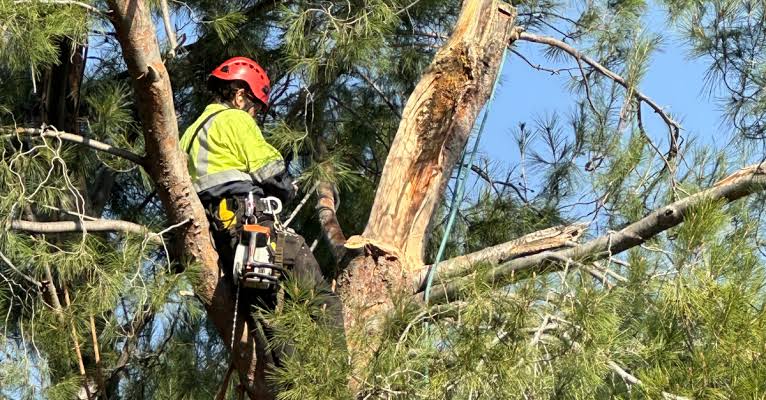
ArborWorld can use controlled rigging, sectional dismantling, planned equipment routes, and ground protection to manage difficult removals. When a tree is too compromised to climb or is located over a structure, crane-assisted removal may be the safer option. The company also handles chipping, hauling, raking, and final cleanup, so the property is not left with a pile of debris after the work is done.
Careful planning also helps minimize disruption for households, tenants, neighbors, and visitors. A well-organized crew considers where equipment will be staged, how access will be maintained, where debris can be processed, and how the work area will be secured. These details are part of professional tree care, particularly when work takes place near busy streets, shared driveways, or closely spaced homes.
Credentials and Clear Pricing Build Confidence
Professional tree work involves elevated workers, heavy limbs, specialized equipment, and real property exposure. ArborWorld highlights its ISA Certified Arborists, ISA Certified Tree Climbers, TRAQ-qualified risk assessment process, OSHA training, licensing, insurance coverage, and woman-owned, family-operated roots. With 23 years in business and a team focused on Southern California tree care, ArborWorld brings local experience to both routine pruning and complex hazardous work.
After the walkthrough, ArborWorld provides a written estimate that defines the recommended scope. Its flat-rate, no-surprise pricing approach helps property owners understand the cost before the project begins. That is a meaningful difference from a vague verbal price that leaves questions about cleanup, access, equipment, permit needs, or added charges once work is underway.
A detailed written scope also makes it easier to compare services accurately. Two estimates may appear similar at first glance, but one may include complete debris removal, careful rigging, stump work, site protection, and final cleanup while another only covers basic cutting. Clear communication gives homeowners a better basis for deciding what level of service and protection their property requires.
What to Ask During an ArborWorld Walkthrough
- What condition did the arborist identify, and what evidence supports it?
- Is the concern related to health, structure, pests, roots, or site conditions?
- Can pruning or treatment help, or is removal the safest option?
- What structures, people, or property could be affected if the tree fails?
- Will permits, HOA approval, or an arborist report be needed?
- How will the crew protect the home, pool, landscaping, and hardscape?
- What work, cleanup, and hauling are included in the written estimate?
- Is follow-up monitoring, maintenance pruning, or additional treatment recommended after the initial work is complete?
Choose ArborWorld for an Informed Tree-Care Decision
Tree decisions should not be based on the fastest answer alone. ArborWorld gives San Gabriel Valley homeowners a clearer path forward by diagnosing the condition, explaining the options, planning for risks, and pricing the defined work honestly. Whether the need involves pruning, removal, stump grinding, palm care, pest treatment, lot clearing, emergency response, or an arborist report, the company is prepared to address the whole situation.
From a small pruning project to a difficult removal involving limited access or overhead targets, the goal remains the same: make a sound decision based on the condition of the tree and the realities of the property. That process can help homeowners protect valuable landscape assets, address hazards responsibly, and avoid paying for work that does not solve the underlying issue.
Local ArborWorld Contact Information
For property owners from La Verne and San Dimas to Claremont, Glendora, Pasadena, and nearby foothill communities, the better first question is not “What is the cheapest quote?” It is “What does my tree actually need?” ArborWorld is ready to help answer it.
Location: ArborWorld | 1859 1st St, La Verne, CA 91750 | (626) 780-0831 | https://arbor-world.com/